
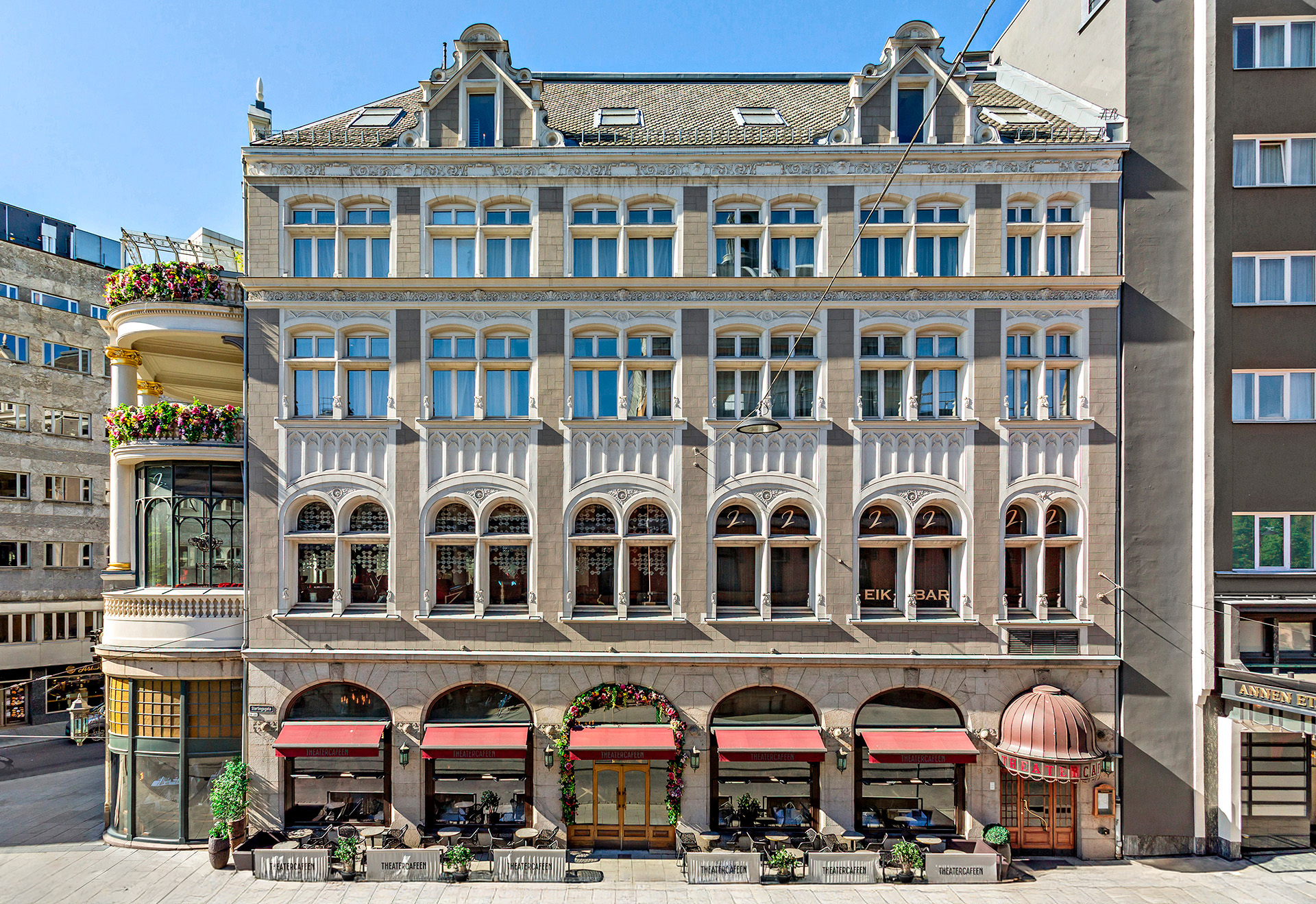
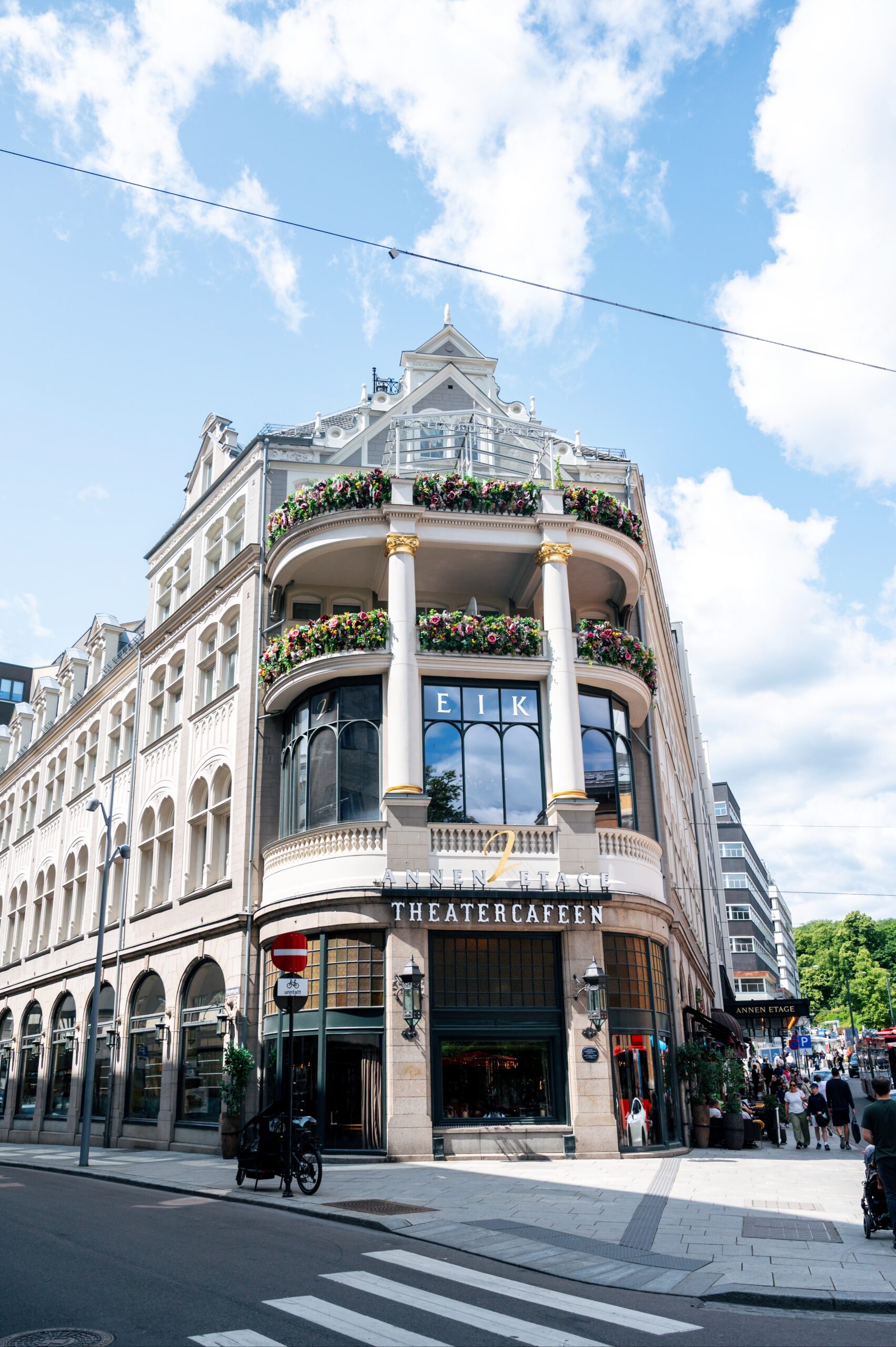
Hotel Continental is built in three phases and forms a triangle between Stortingsgaten, Klingenberggaten and Olav Vs gate.
The hotel represents three different architectural eras. More than 60 years passed between the construction of the first part of Hotel Continental and the completion of the last building. It is primarily from the outside that you get an impression of the different style eras.
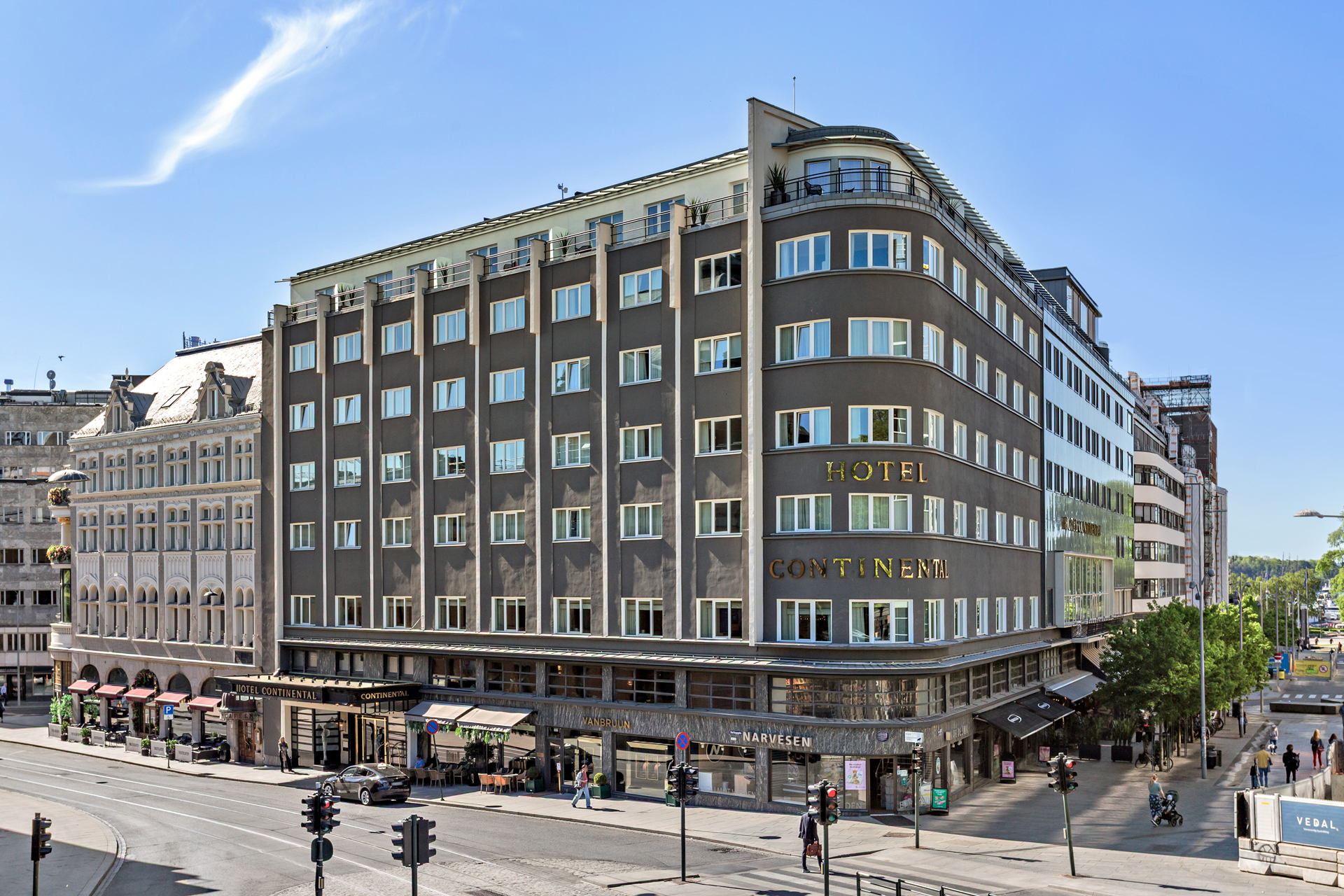
In August 1930, work began on the construction of Hotel Continental's second building. The Funkis building, with elements of the Art Deco style, was eight storeys high with an indented top floor. The executive architect was Ole Øvergaard, and the building was inaugurated on May 17, 1932. In this round of construction, all new hotel rooms had their own bathrooms, and Hotel Continental had a central lobby with an entrance from Stortingsgaten. This building is also on the City Antiquities Department's yellow list of protected cultural monuments and environments in Oslo.
In August 1930, work began on the construction of Hotel Continental's second building. The Funkis building, with elements of the Art Deco style, was eight storeys high with an indented top floor. The executive architect was Ole Øvergaard, and the building was inaugurated on May 17, 1932. In this round of construction, all new hotel rooms had their own bathrooms, and Hotel Continental had a central lobby with an entrance from Stortingsgaten. This building is also on the City Antiquities Department's yellow list of protected cultural monuments and environments in Oslo.
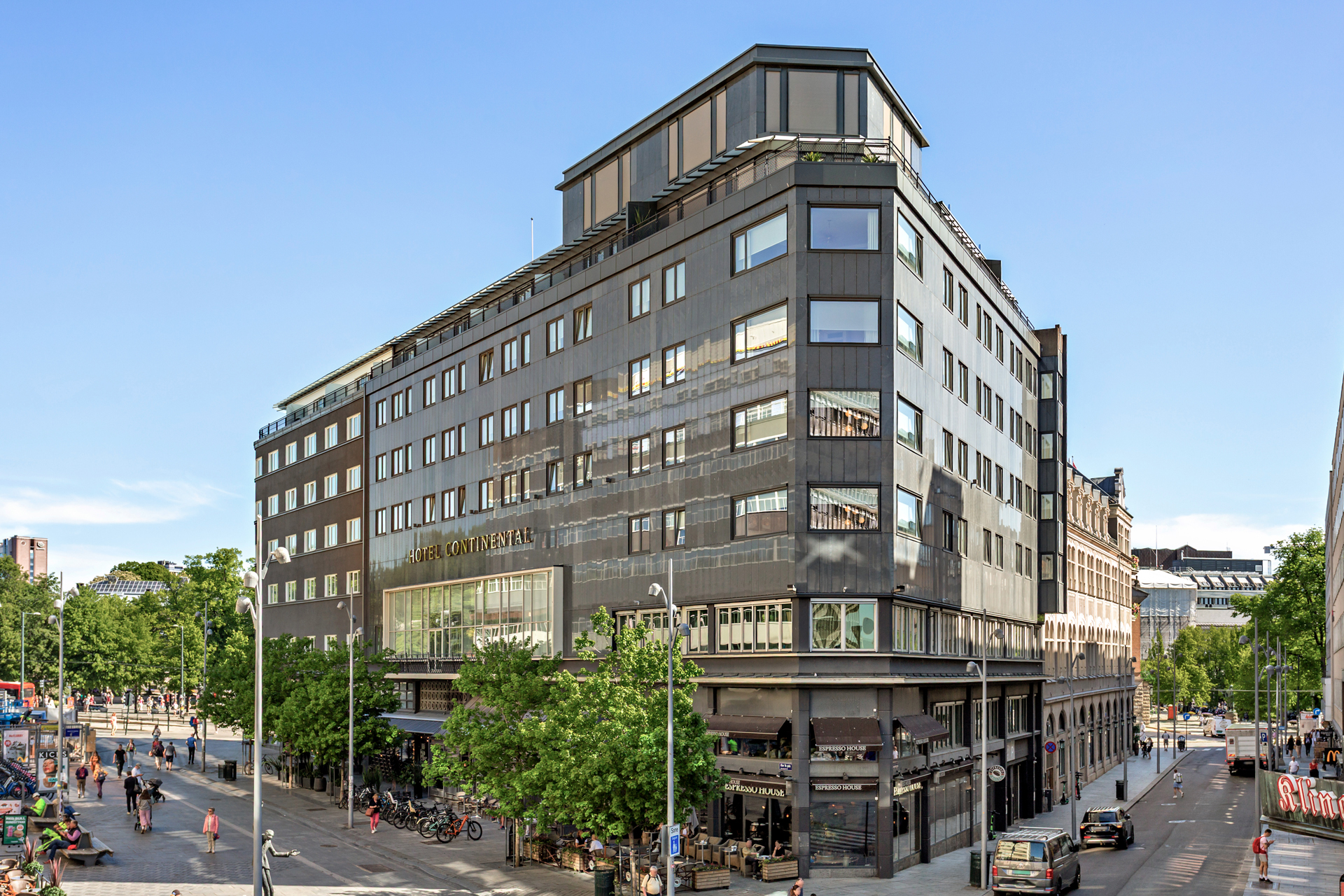
When Hotel Continental was to expand with its third building at the end of the 1950s, architect Ole Øvergaard was once again commissioned along with experienced contractors. Bernt Heiberg was responsible for furnishing the hotel rooms and for the two new restaurants on the corner facing Vika. This time, a new method of wall cladding was used, and enameled steel panels gave the facade a strong character.